Surya Namaskar – 12 poses of Surya Namaskar and its Benefits
What is Surya Namaskar?
Without the sun, there will be no life on earth. Surya Namaskar or ‘Sun Salutation‘ is a very ancient technique of paying respect or expressing gratitude to the sun that is the source of all forms of life on the planet. Symbolically, the sun becomes our source of energy as well. About the history of this technique, it has been said by the ancient rishis of India that the different parts of the body are governed by different devas (divine impulses or divine light).
The solar plexus (located behind the navel, which is the central point of the human body), also known as the second brain, is said to be connected to the sun. This is the main reason why the ancient rishis recommended the practice of Surya Namaskar, because the regular practice of this technique enhances the solar plexus, which increases one’s creativity and intuitive abilities.
When can I do these asanas?
You can do Surya Namaskar at any time of the day. However, it is best to do it at sunrise. This is when the sun rays help revitalize the body and refresh the mind. There are benefits of doing Surya Namaskar at other times of the day too. If you practice it in the afternoon, it energizes your body instantly whereas when done at dusk, it helps you unwind.
How can children benefit from Sun Salutation yoga?
With competition everywhere, children are exposed to stress and anxiety at an early age. Surya Namaskar helps children calm their mind, improve concentration, and build endurance. It reduces the feeling of anxiety and restlessness, especially during exams. Regular practice of Surya Namaskar also gives strength and vitality to the body.
It also aids in muscle growth and making the body more flexible. Children as young as five-year-old can also practice Surya Namaskar daily.
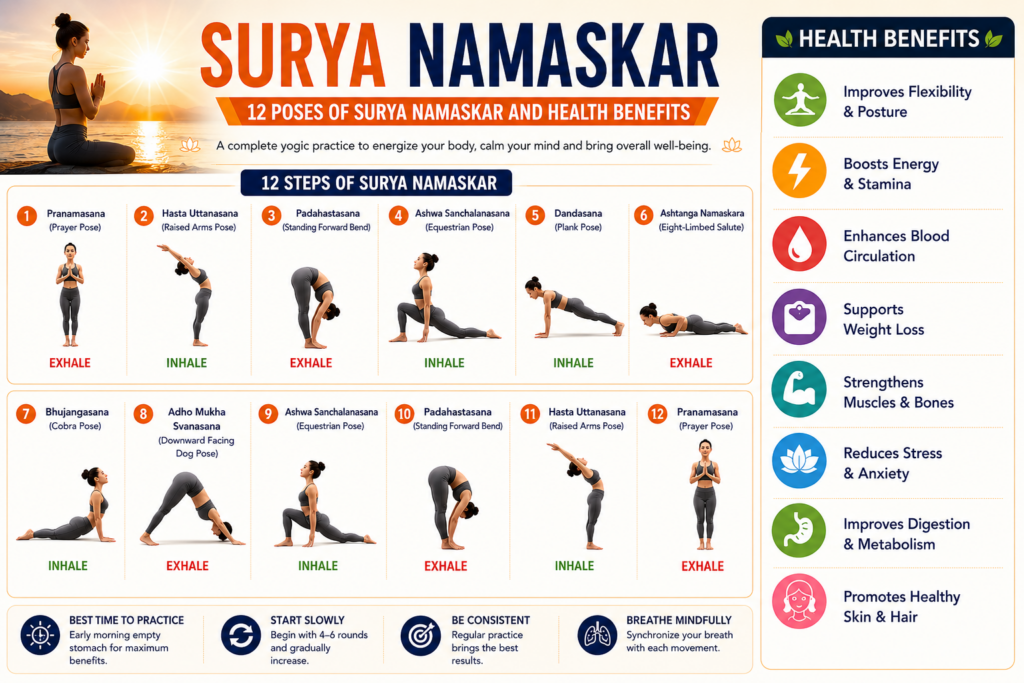
12 Asana’s of Surya Namaskar – Step By Step
Asana 1: PRANAMASANA (Prayer Pose)

Stand straight, broaden your shoulders by placing hands by your side and relax. Take a deep inhale while lifting both your hands up and exhale when you bring them together in a namaskar mudra pose.
Asana 2: HASTA UTTANASANA (Raised Arm Pose)

Continue the prayer pose from the previous asana and raise your hands up and back. Slowly inhale and bring your biceps close to the ears, it should stretch the whole body.
Asana 3: PADAHASTASANA (Standing Forward Bend)
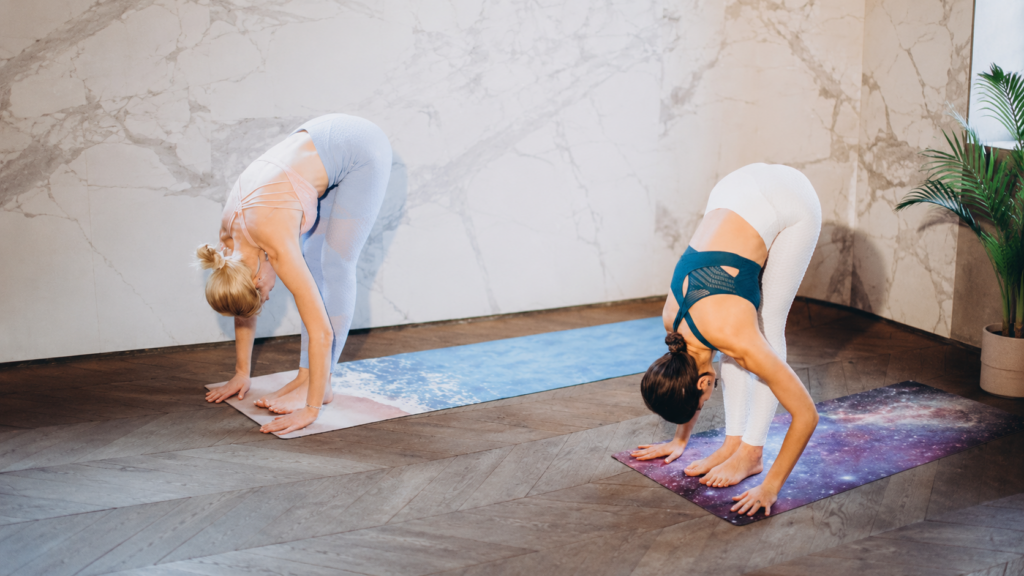
Exhale and bend forward to touch the floor with your hands, while keeping the back erect. Beginners can bend their knees to touch their palm on the floor.
Asana 4: ASHWA SANCHALASANA (Equestrian Pose)
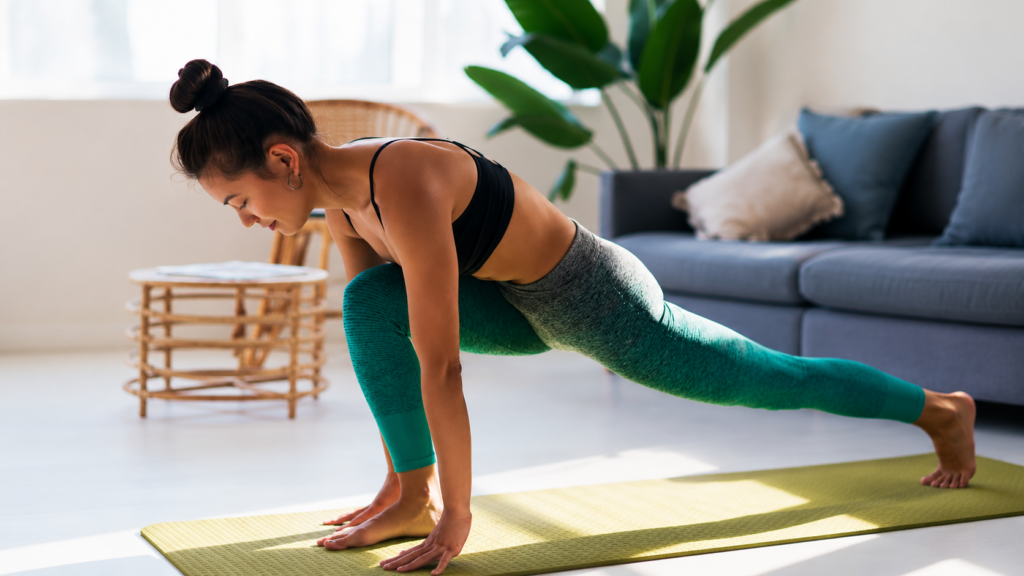
Bend your right knee towards the chest and take your left leg backward raise your head and take a deep inhale.
Asana 5: DANDASANA (Plank Pose)

Breathe in and bring your right leg back next to the left leg. Keep your hands under your shoulders, keeping your body parallel to the ground. Your entire body should be in one straight line.
Asana 6: ASHTANGA NAMASKAR (Salute with Eight Points or Parts)

In this pose, you have to bring your knees together to the floor and exhale. With your chest and chin downward, you have to push your hips backwards and make your body slide in front. All eight parts of the body should touch the floor.
Asana 7 :BHUJANGASANA(Cobra Pose)
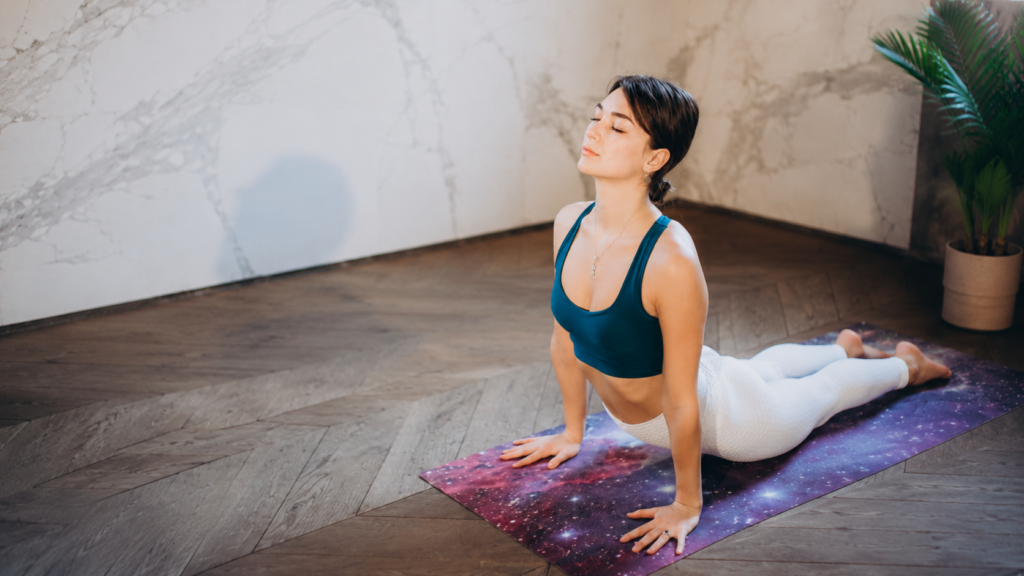
Now slide forward and come into the cobra pose by raising your chest upward while you exhale. Keep the elbows bent and shoulders away from ears. This pose gives a forward stretch to the body
Asana 8 : ADHO MUKHA SVANASANA (Downward Facing Dog Pose)

To perform this step of Surya Namaskar, exhale and lift the hips upward bringing the body in the pose of inverted ‘V’.
Asana 9 : ASHWA SANCHALASANA (Equestrian pose)
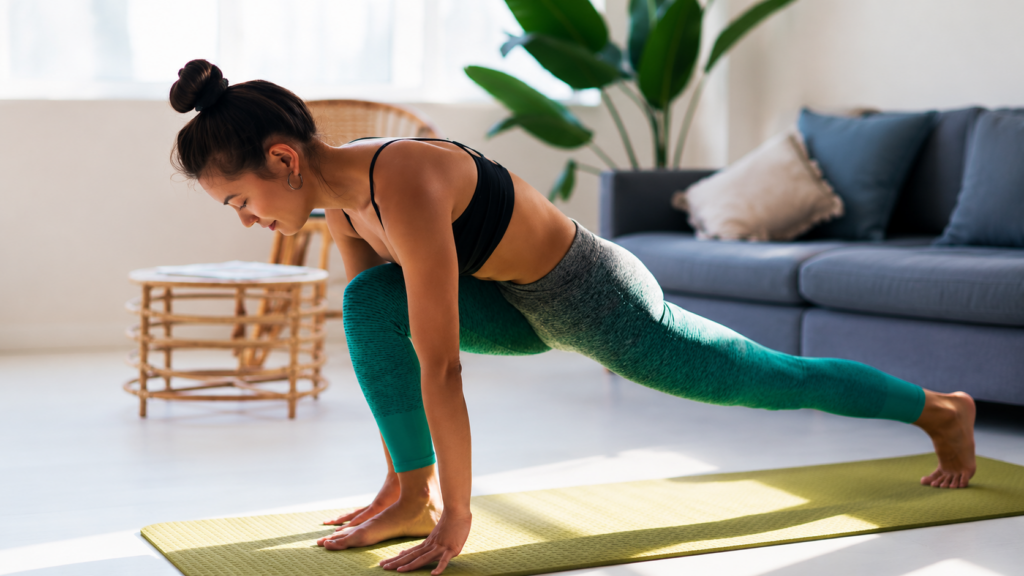
Inhale and bring your right foot forward in between the two hands and bring your left knee down to the ground. Press your hips down and lookup.
Asana 10: PADAHASTASANA (Standing Forward Bend)
Exhale and bend down while placing your toes aligned to each other. Touch your toes with your fingers. Bend the knees if needed and gently straighten the knees and try to touch your nose to the knees.
Asana 11: HASTA UTTANASANA (Raised Arm Pose)
Switching to the eleventh pose of Surya Namaskar postures, here you have to inhale while rolling up the spine. Gently raise both the hands up and backward making sure that your biceps are placed rightly close to the ears. Push your hips outward to complete the pose efficiently.
Asana 12: PRANAMASANA (Prayer Pose)

This is the last of the twelve poses of Surya Namaskar. Exhale, straighten your body, bring both arms gently downwards. Relax and encounter the serene sensation of your body.
What are the benefits of Surya Namaskar?

Regular exercise of Surya Namaskar increases physical and mental energy, along with thought and memory also intensifies. It has many other benefits which are as follows:
- Practicing Surya Namaskar strengthens bones.
- Improves eyesight.
- Blood flow with in the body is accelerated which gives relief in hypertension disease.
- Surya Namaskar improves blood circulation to the scalp, thereby preventing hair loss.
- It is helpful in controlling anger.
- The waist becomes flexible and the backbone becomes strong.
- Increases memory and concentration.
- Surya Namaskar improves blood circulation to all parts of the body, thus keeping the skin young
Daily Surya Namaskar practice helps improve flexibility, boost energy, support weight loss, improve blood circulation, reduce stress, and strengthen the whole body naturally.
Yes, regular Surya Namaskar for weight loss may help burn calories, improve metabolism, and reduce belly fat when combined with a healthy lifestyle and balanced diet.
The best time to practice Surya Namaskar yoga is early morning during sunrise, as it helps refresh the mind, energize the body, and improve focus throughout the day.
Yes, regular Sun Salutation yoga stretches the spine, shoulders, legs, and core muscles, helping improve flexibility, posture, and overall body balance naturally.





Post Comment